Authentic Pad Thai
ผัดไทย — Pad Thai
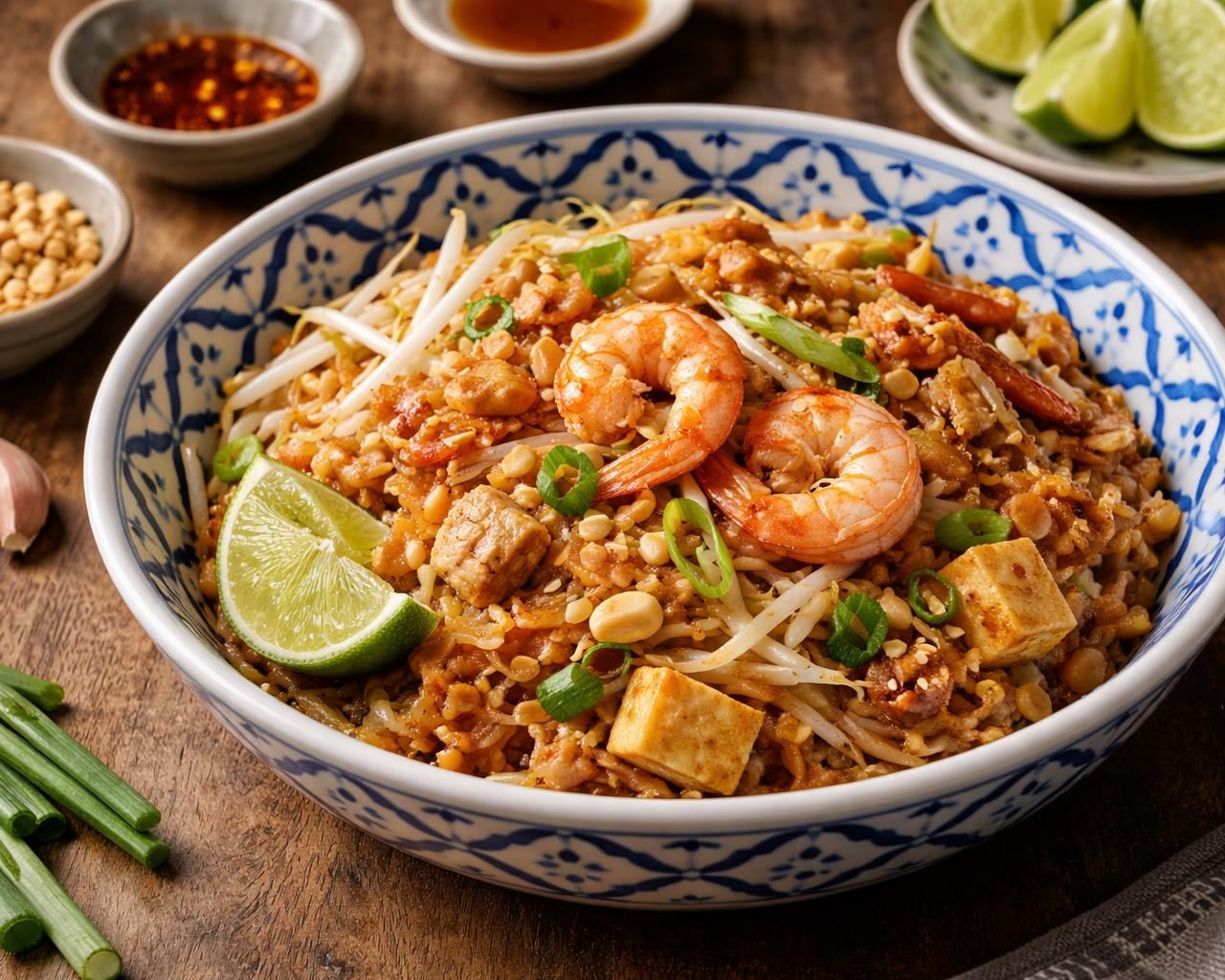
The full street-style version: tamarind, shrimp, tofu, preserved radish, egg, peanuts and the noodle texture that actually matters.
- Prep
- 20 min
- Cook
- 5 min
- Serves
- 4
- Heat
- mild
Pad Thai is Thailand's most internationally famous noodle dish, but the version worth learning is not a sugary orange pile of noodles wearing peanuts as decoration.
A good plate is about balance and texture: sour tamarind, salty fish sauce, palm-sugar sweetness, chewy rice noodles, soft egg, crisp sprouts, crunchy peanuts and enough wok heat to pull everything together without turning it into paste.
This is the most traditional Pad Thai in our collection. It keeps the tofu, dried shrimp and preserved radish that easier home versions often leave out, which means more shopping but also more of the layered savory flavor people are actually chasing when they say they want authentic Pad Thai.
Ingredients
- 4 tablespoons Coconut or palm sugar (chopped fine if in block form)
- 2 tablespoons Tamarind paste
- 2 tablespoons Fresh lime juice
- 2 tablespoons Distilled white vinegar
- 3 tablespoons Thai fish sauce
- 1 tablespoon Sriracha hot sauce
- 4 cups Prepared rice noodles (soaked according to package directions until flexible)
- 8 Small fresh shrimp (peeled, cleaned)
- 1/2 cup Chicken thigh meat (boned, skinned, cut into small cubes)
- 1/2 cup Firm tofu (cut into small cubes)
- 2 tablespoons Dried shrimp (cracked open with a mortar and pestle)
- 2 tablespoons Sweet pickled radish (rinsed, chopped)
- 1 Chicken egg
- 4 Garlic, large cloves (chopped)
- 2 cups Bean sprouts (rinsed and drained, plus more for garnish)
- 6 Green onions (dark green tops cut into 2-inch pieces, a few saved whole for garnish)
- 1/2 cup Dry toasted peanuts (chopped)
- 2 tablespoons Vegetable oil
Directions
- Soak dried rice noodles per package directions (about 15 minutes at room temperature) until flexible but not soft — you should be able to fold one without it breaking. Drain well.
- Toast raw peanuts in a dry pan until fragrant and browned in spots, if not using pre-toasted. Cool and chop.
- Combine the sugar, tamarind paste, lime juice, vinegar, fish sauce, and sriracha in a small pan. Cook over low heat, stirring continuously, until the sugar melts and the sauce turns thick and bubbly. Remove from heat and cool.
- Cut the chicken into small cubes. Clean the shrimp. Cut the tofu into cubes. Chop the garlic. Cut the green onion tops into 2-inch pieces, saving a few whole for garnish. Rinse and chop the pickled radish. Crack the dried shrimp open with a mortar and pestle to loosen them.
- Heat the oil in a large wok over medium heat, keeping it on the low side to avoid scorching. Fry the garlic lightly.
- Add the chicken, shrimp, tofu, dried shrimp, and pickled radish. Fry until the chicken is about half cooked.
- Push everything to one side and crack the egg into the open space. Let it cook mostly undisturbed, breaking the yolk and spreading it slightly, until fairly firm.
- Stir everything together and continue frying until the chicken is fully cooked.
- Add the noodles on top and push them into the other ingredients and oil so they begin to soften.
- Once the noodles have softened enough to mix, add 3 to 4 tablespoons of the sauce. Stir and flip from the bottom until well blended.
- Cook and stir until the sauce and oil are absorbed into the noodles and everything looks browned and sizzling.
- Lay the bean sprouts and green onion pieces in the center without letting them touch the hot pan directly. Fold the noodles up and over to form a pocket, letting the vegetables steam inside for about 2 minutes without stirring.
- Sprinkle in half the chopped peanuts, turn off the heat, and toss everything together.
- Serve on a shared platter or individual plates with a mound of extra bean sprouts, green onion or chives, lime wedges, ground dried chili, and sugar on the side for guests to season to taste.
Notes
The noodles decide whether this works. Soak them until flexible but still firm, then finish cooking them in the sauce. If they are soft before they hit the wok, dinner is already in negotiations with mush.
Substitutions
Pork can replace the chicken. Leave out the shrimp and dried shrimp for a vegetarian version, seasoning the sauce with a little extra soy sauce in place of fish sauce.