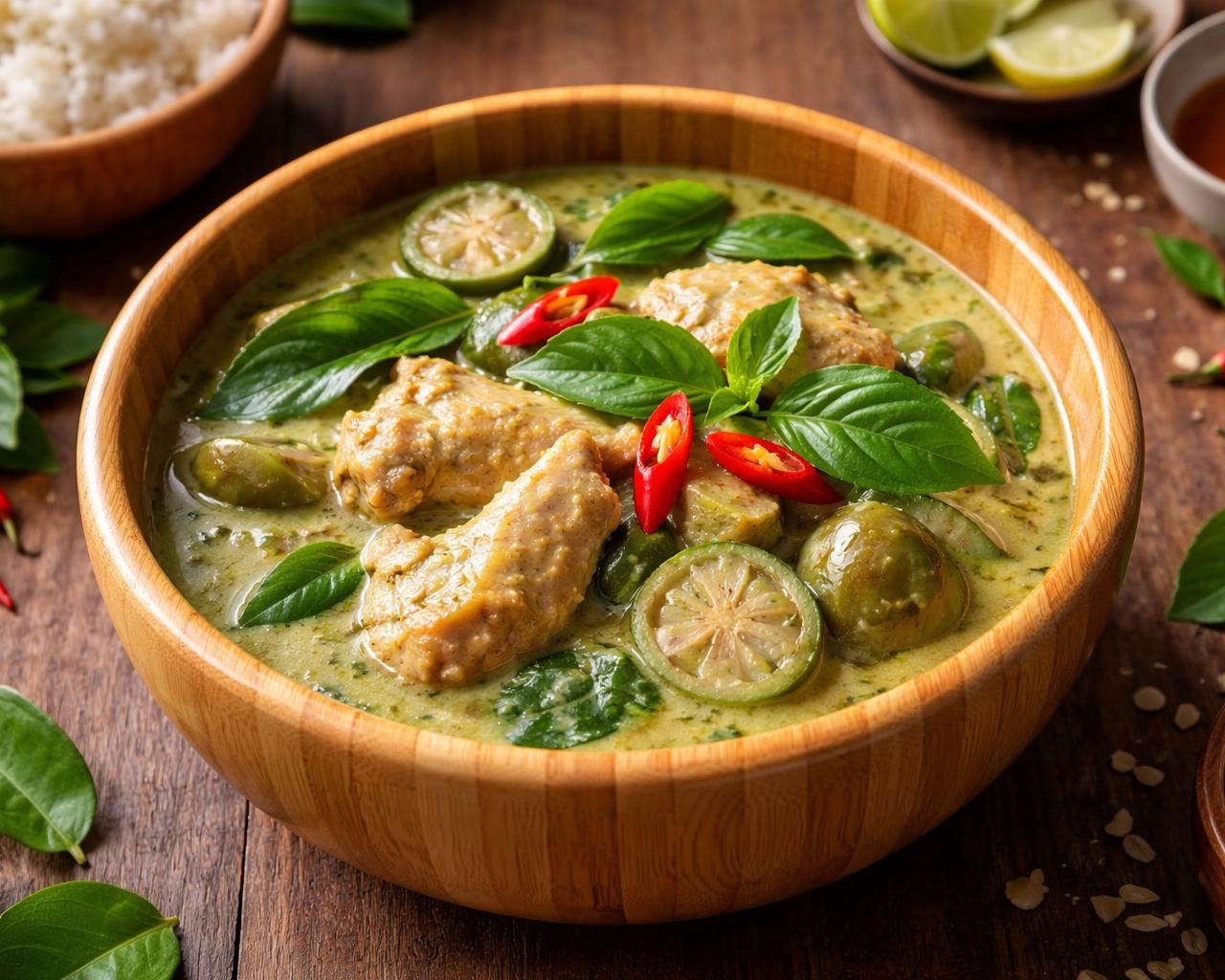
Thai Green Curry – Gaeng Keow Wan
แกงเขียวหวานไก่ — Gaeng Keow Wan Gai
Green, fragrant, creamy, and just spicy enough to make your jasmine rice nervous.
- Prep
- 15 min
- Cook
- 25 min
- Serves
- 4
- Heat
- medium
Green curry is one of Thailand's great culinary magic tricks: a bowl that looks soft, creamy and almost polite, then hits you with fresh green chile, basil, makrut lime and enough aroma to make the neighbors suddenly very interested in dinner.
Known in Thai as gaeng keow wan, this curry is most closely associated with Central Thai cooking. The name is often translated as “sweet green curry,” but don't read that as dessert curry. The “sweet” points toward the curry's particular green color and rounded character, while the finished dish should still balance heat, salt, richness and a touch of sweetness.
Central Thailand — including Bangkok and the fertile Chao Phraya basin — is famous for curries that juggle coconut richness with fresh herbs, fish sauce, sugar and chile. Green curry is basically that balancing act wearing a very attractive green outfit.
Ingredients
- 3 tbsp Green curry paste (homemade or a good Thai brand)
- 400 ml Full-fat coconut milk (do not shake the can if you want to scoop the thick cream)
- 300 g Chicken thigh (thinly sliced)
- 4 Thai eggplants (quartered; small Asian eggplant works in a pinch)
- 1 cup Thai sweet basil (loosely packed)
- 3 Makrut lime leaves (center rib removed, leaves torn)
- 2 tbsp Fish sauce (add gradually and taste)
- 1 tbsp Palm or coconut sugar
- 2 Bird's eye chilies (optional garnish)
- 4 servings Jasmine rice (hot and ready)
Directions
- Slice the chicken, quarter the eggplants, tear the makrut lime leaves and pick the basil. Thai curry moves fast once it starts, so having half your ingredients still hiding in produce bags is a terrible strategy.
- Open the coconut milk without shaking it. Scoop the thick cream from the top into a wok or pot over medium heat. Let it heat until glossy and beginning to release a little oil. This is the foundation, so give it a minute to become interesting.
- Add the green curry paste and fry it in the coconut cream for 3–4 minutes, stirring often. You want a huge burst of chile-and-herb aroma and tiny beads of oil appearing around the paste. If it smells fantastic, you're winning. If it smells burned, we need to talk.
- Add the sliced chicken and toss it through the paste for about 2 minutes, just until the outside loses its raw pink color. Don't cook it into oblivion yet — it still has simmering to do.
- Pour in the remaining coconut milk plus about half a can of water. Add the torn makrut lime leaves and bring everything to a gentle simmer. Gentle is the important word. We're making curry, not conducting a volcanic experiment.
- Add the eggplants and simmer about 10 minutes, until tender and the chicken is cooked through. Keep the sauce moving occasionally and don't let the eggplant collapse into mush.
- Add the fish sauce and sugar gradually, tasting as you go. You're looking for savory first, rounded by a little sweetness, with green chile and herbs lingering behind it. Curry paste brands vary, so your tongue outranks the measuring spoon here.
- Turn off the heat, then fold in the Thai basil. Let the residual heat wilt it gently. Serve with jasmine rice and, if you like trouble, a few fresh chile slices. Once it tastes balanced, stop adjusting it. Put down the fish sauce. Dinner is ready.
Notes
DON'T SCREW THIS UP: Watch the coconut cream and curry paste closely. You want the paste fragrant and the coconut fat beginning to separate, not scorched. Once the basil goes in, kill the heat. Basil that gets boiled into submission loses the fresh perfume you worked so hard to build.
Substitutions
No Thai eggplant? Use small Asian eggplant or cubed regular eggplant. No Thai basil? Italian basil can rescue dinner, but the flavor won't be quite the same. Can't find makrut lime leaves? Check the freezer at an Asian market before giving up — frozen leaves work beautifully. Want less heat? Start with a milder green curry paste and adjust upward. Want more heat? Fresh bird's eye chile will happily ruin your afternoon if you get cocky.