Northern Thai Hang Lay Pork Curry
แกงฮังเล — Gaeng Hang Lay
No coconut milk. Lots of pork. Burmese roots. Northern Thailand understood the assignment.
- Prep
- 20 min
- Cook
- 120 min
- Serves
- 4
- Heat
- mild
If your mental picture of Thai curry is a bowl of coconut milk, Hang Lay is here to mess with your expectations.
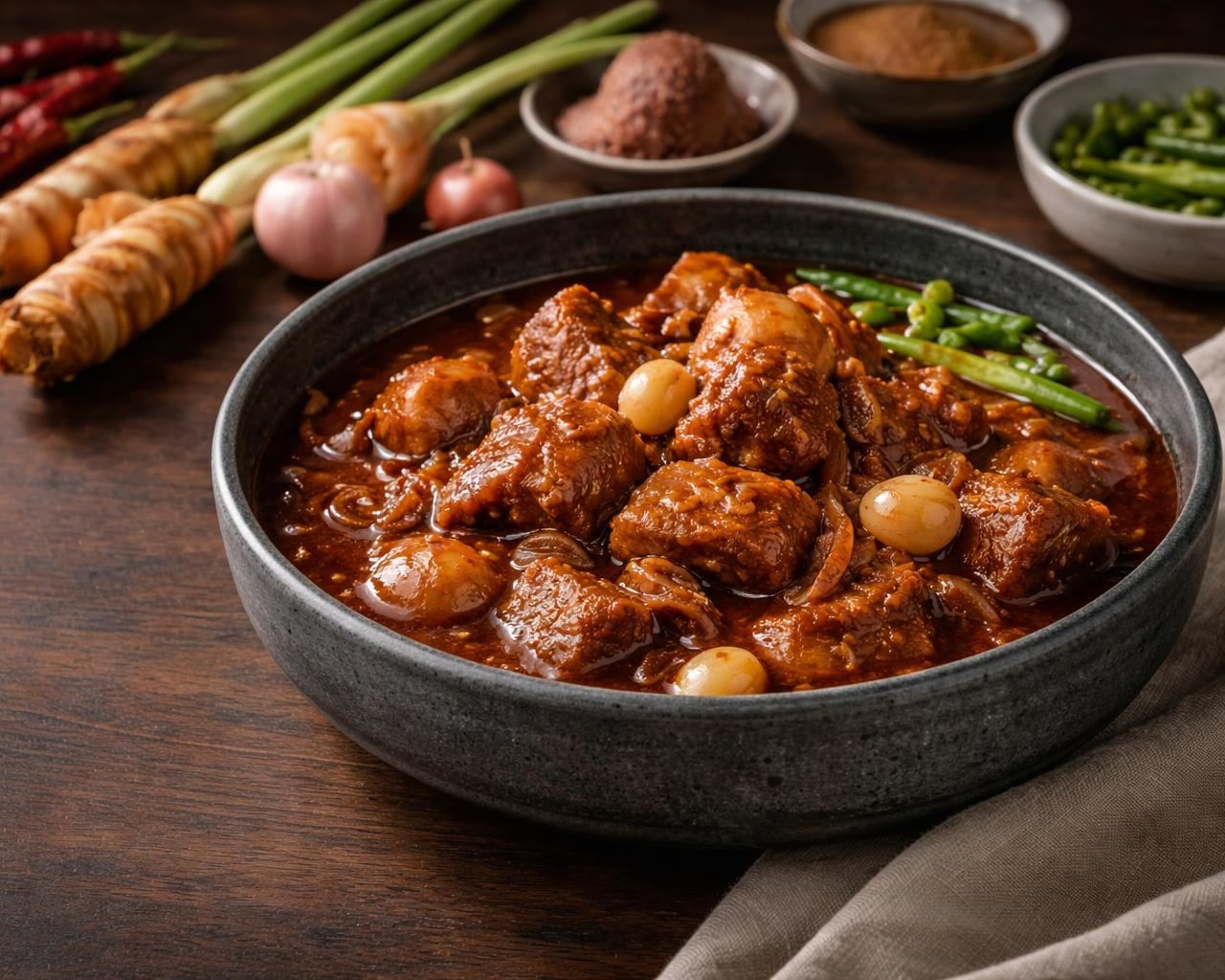
This northern Thai pork curry skips coconut milk entirely. Instead, fatty pork slowly simmers with dried chile, lemongrass, galangal, shallot, tamarind, ginger, garlic and warm dried spices until the sauce turns dark, glossy and deeply savory. It is rich, tangy, gently sweet and the sort of dish that somehow tastes even better after spending a night in the refrigerator thinking about what it has done.
Hang Lay is especially associated with Northern Thailand and the old Lanna culinary tradition around Chiang Mai and neighboring provinces. Its roots are linked to Burmese influence, a reminder that modern borders are much tidier than the history of actual people and food. Northern Thailand has long exchanged ingredients, techniques and traditions with communities across what is now Myanmar, Laos and southern China.
Ingredients
- 3 pieces Sun-dried Thai long chili (soaked, seeded)
- 1 small piece Galangal (grated or finely chopped)
- 2 stalks Lemongrass (bottom portion, sliced)
- 6 pieces Asian shallot
- 1/2 teaspoon Salt
- 1/2 teaspoon Thai shrimp paste
- 9 oz Pork belly (cut into 1-inch cubes)
- 9 oz Pork shoulder or butt (cut into 1-inch cubes)
- 1/2 cup + 2 tablespoons Shallots, sliced
- 1 1/4 teaspoons Garam masala powder
- 1 3/4 tablespoons Thai fish sauce
- 1 1/4 tablespoons Dark and sweet soy sauce
- 1 1/4 tablespoons Distilled vinegar
- 1 3/4 tablespoons Coconut sugar
- 2 1/4 tablespoons Tamarind paste
- 1 1/8 cups Water (plus more as needed while simmering)
- 1/3 cup Ginger (julienned)
- 1/3 cup Pickled garlic (cloves separated, peeled)
- 1 1/4 cups Green beans (cut into pieces)
Directions
- Soak the dried long chiles in warm water for about 30 minutes, then open them and remove the seeds. Slice the lemongrass, shallots and galangal while they soak. This is the calm portion of the program. Things get porkier soon.
- Pound the softened chiles with salt until broken down. Add lemongrass, shallot and galangal in stages, grinding each before adding the next. Finish with shrimp paste. A mortar and pestle gives great texture, but a small food processor is allowed if your arm has other plans.
- Cut pork belly and pork shoulder into roughly 1-inch cubes. Julienne the ginger, peel the pickled garlic and slice the remaining shallots. Measure everything before cooking. A two-hour braise is not improved by discovering halfway through that you forgot tamarind.
- Warm a little oil in a heavy pot over low heat. Fry the curry paste gently for about 2 minutes, then add sliced shallots and cook until softened. If it starts sticking, add a splash of water. Low and slow — burned lemongrass is not a regional specialty.
- Add both cuts of pork and turn them through the paste. Stir in fish sauce, sweet dark soy and vinegar, followed by coconut sugar, tamarind and garam masala. Keep the heat moderate and let every cube get thoroughly coated.
- Add enough water to just cover the pork. Bring to a boil, then immediately lower to a lazy simmer. Cover and cook about an hour, checking occasionally and adding a little water if the pot gets too dry. The pork should be heading toward tender, not bouncing back at your fork.
- Add the julienned ginger and pickled garlic. Simmer uncovered for another 30 minutes so the sauce reduces and clings to the pork. At this point you can cool and refrigerate it overnight — which, inconveniently for impatient people, makes it even better.
- Reheat until bubbling, add the green beans and cook about 5 minutes so they stay lively rather than turning army green. Rest the curry 10–15 minutes, then serve with sticky rice and crispy shallots if you like. Try not to eat all the pork belly while pretending to check the seasoning.
Notes
DON'T SCREW THIS UP: Keep the simmer low and patient. Pork belly needs time for the fat to soften and the shoulder needs time for connective tissue to relax. Better yet, make the curry a day ahead. Overnight rest turns an already good pot into the reason somebody starts scraping the bottom with sticky rice.
Substitutions
Use all pork shoulder if you want a leaner pot, though you'll lose some of the luxurious richness from pork belly. Store-bought garam masala works when you don't want to build a spice blend from scratch. Can't find pickled garlic? Use whole peeled garlic cloves, but expect a slightly different tang. Green beans are optional and can be replaced with another crisp green vegetable. Serve with jasmine rice if sticky rice isn't available — Northern Thailand will survive.