Thai Massaman Curry with Chicken
แกงมัสมั่นไก่ — Gaeng Matsaman Gai
Warm spices, tender chicken, creamy coconut, potatoes — basically a hug that learned Thai.
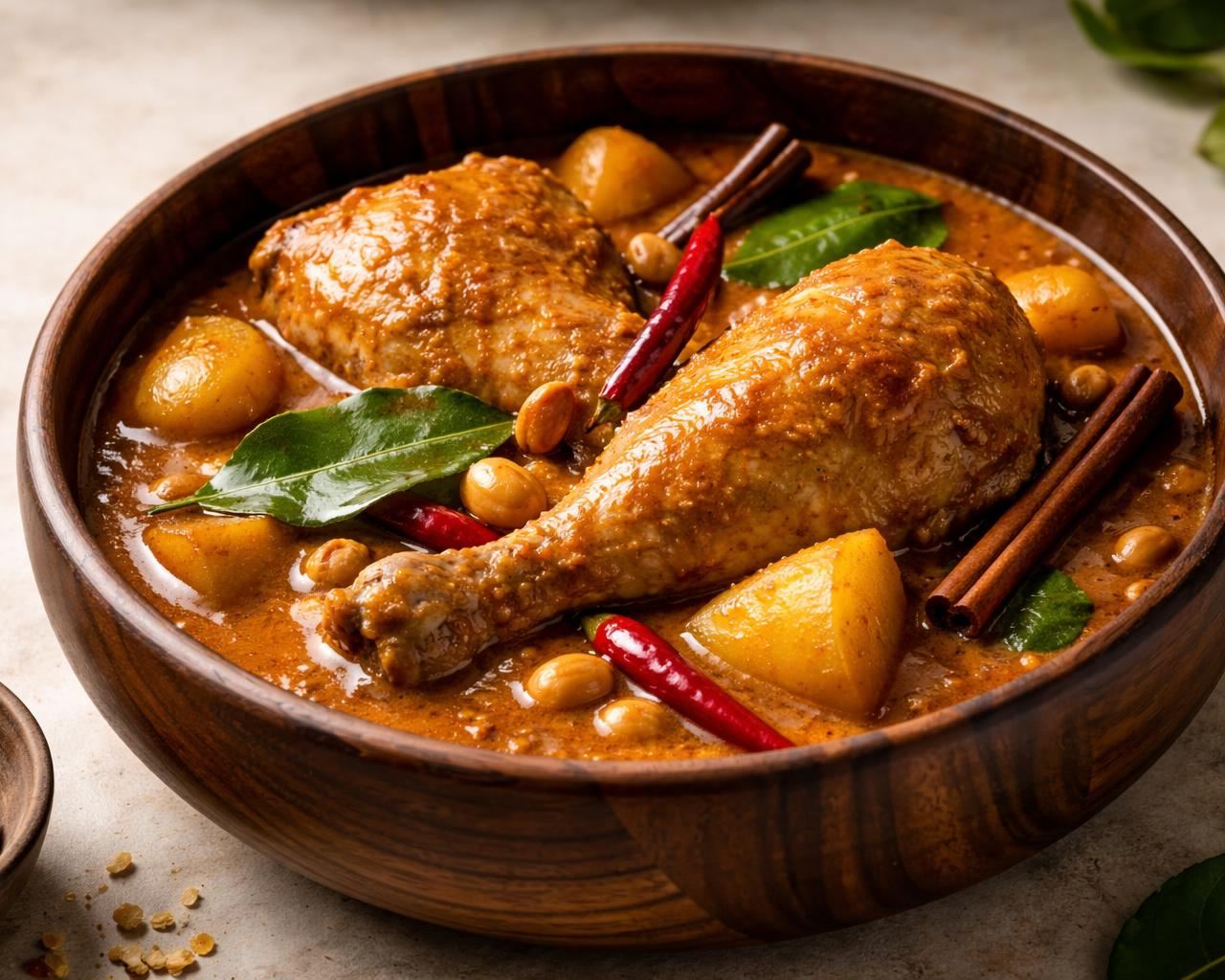
- Prep
- 15 min
- Cook
- 60 min
- Serves
- 4
- Heat
- mild
Massaman curry is the slow, cozy cousin in the Thai curry family. Instead of leading with a blast of fresh chile, it comes at you with coconut milk, cinnamon, warm dried spices, tamarind, peanuts and tender chicken. It is the curry equivalent of someone handing you a blanket and then quietly adding another spoonful to your bowl.
Massaman has a fascinating place in Thai food history because its flavor profile reflects centuries of contact between Siam and Muslim traders and communities connected to Persia, India and the Malay world. Its exact origin story is debated, so beware of anyone claiming one neat little invention story. Food history is rarely that cooperative.
Today Massaman is strongly associated with Muslim Thai cooking and southern Thailand, though it is loved throughout the country. The warm dried spices immediately separate it from many curries built around fresh Thai herbs. Cinnamon, cardamom-like notes, cumin and other spices mingle with coconut, tamarind and fish sauce to create something unmistakably Thai but clearly shaped by international exchange.
Ingredients
- 4 Whole chicken legs
- 2-3 Potato (peeled, cut into large chunks)
- 1 Brown or yellow onion (peeled, cut into quarters)
- 1/4 cup Raw peanuts (toasted)
- 2 cups Coconut milk (divided)
- 1-2 Thai long chili (sliced diagonally)
- 1-2 Cinnamon sticks
- 3-4 Kaffir lime leaves (sliced into thin strips)
- 1-2 Bay leaf
- 1/2 cup Coconut sugar
- 2 teaspoons Tamarind paste
- 1 tablespoon Orange juice
- 1 tablespoon Lime juice
- 1-2 teaspoons Light soy sauce (for marinating the chicken)
- 1-2 teaspoons Fish sauce (to taste)
- 2 tablespoons Massaman curry paste
Directions
- Rub the chicken with light soy sauce and let it sit for about 15 minutes. Heat the broiler to roughly 450°F / 230°C. We're browning first because pale boiled chicken has never inspired anyone.
- Toast the peanuts in a dry pan over low heat until fragrant and lightly browned. Quarter the onion and cut the potatoes into generous chunks. Massaman cooks slowly, so tiny potato cubes will surrender far too early.
- Set the chicken skin-side up on a rack over a baking sheet and broil 5–10 minutes, watching closely, until browned and sizzling. It does not need to cook through. We're building flavor, not finishing the job.
- Heat half the coconut milk in a large pot over low to medium heat. Add the curry paste and cook about 5 minutes, stirring, until thick, glossy and aromatic. This is where those warm spices stop being powder in a jar and start becoming dinner.
- Stir in the remaining coconut milk, then nestle in the chicken. Add potatoes, onion, toasted peanuts, cinnamon and bay leaf. Add enough water to nearly cover everything, bring to a gentle simmer, cover and cook about 30 minutes or until the chicken is cooked and potatoes are tender.
- Stir in the orange and lime juices and start with about half the tamarind. Add the coconut sugar and let everything return to a gentle bubble. Taste before adding more tamarind — sour is easy to add and annoyingly difficult to remove.
- Add fish sauce a little at a time until sweet, sour, salty and warm spice feel balanced. Packaged curry pastes vary in salt, so blindly following a fish-sauce measurement is how perfectly good curry ends up tasting like the Gulf of Thailand.
- Turn off the heat and let the curry rest at least 15 minutes. The sauce settles, thickens slightly and the flavors get acquainted. Serve over jasmine rice with sliced chile and fine ribbons of makrut lime if desired. Waiting is annoying. Waiting is also worth it.
Notes
DON'T SCREW THIS UP: Massaman needs time. Keep the simmer gentle so the chicken becomes tender without the coconut sauce breaking aggressively or the potatoes disintegrating. And don't judge the sauce too early — tamarind, sugar and fish sauce do the final balancing act near the end.
Substitutions
Chicken thighs or bone-in leg pieces both work. Beef is excellent but needs a longer simmer. Sweet potato can replace regular potato for a sweeter version. No coconut sugar? Palm sugar is ideal; light brown sugar can fill in. If you're allergic to peanuts, leave them out rather than gambling with dinner. Tamarind is worth finding at an Asian market because lime juice alone doesn't reproduce its deep sweet-sour character.