Thai Yellow Curry Paste
Kaeng Kari / Gang Garee
A warmly spiced yellow curry paste built on turmeric, cumin, and fresh galangal
- Prep
- 30 min
- Serves
- 4
- Heat
- mild
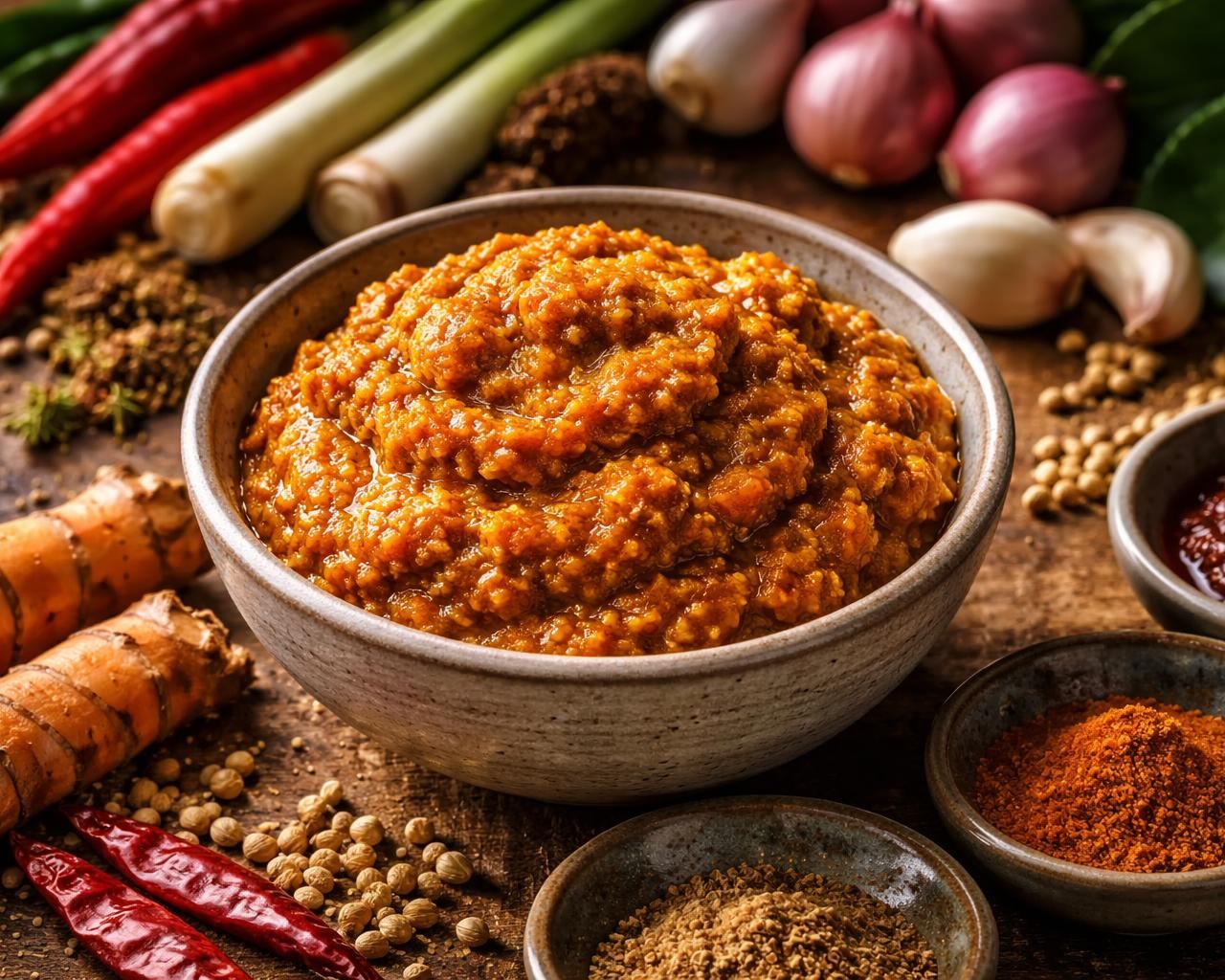
Kaeng Kari's warm, sweet character comes from a spice blend that leans more toward cinnamon, clove, and turmeric than the sharper chili heat found in most other Thai curry pastes, which is exactly why it's often the curry that introduces newcomers to Thai food. The same fresh herb base of galangal, lemongrass, garlic, and shallot common to other curries gets folded together here with those warm spices and both fresh and powdered turmeric for color, along with a hit of coconut sugar and fish sauce for balance. Ground by hand, the finished paste stays visibly fibrous from the lemongrass, a texture that only softens once it's actually cooked into a curry, which is part of what separates a homemade batch from the smoother, more uniform packaged version.
Ingredients
- 2 tablespoons Galangal (cleaned, cut up)
- 2 tablespoons Lemongrass (cleaned, cut up)
- 2 tablespoons Red shallots (cleaned, cut up)
- 3 tablespoons Garlic (cleaned, cut up)
- 1 tablespoon Coriander root (cleaned, cut up)
- 2 tablespoons Fresh turmeric (cleaned, cut up)
- 3 Thai long chilies (cut up)
- 4 Kaffir lime leaves (center stems removed, finely chopped)
- 1 tablespoon Cumin
- 1 teaspoon Coriander seeds
- 1 teaspoon Paprika powder
- 1 teaspoon Turmeric powder
- 1/2 teaspoon Ground cloves
- 1/2 teaspoon Ground cinnamon
- 1/4 teaspoon Ground dried Thai hot chili
- 2 teaspoons Thai shrimp paste
- 2 teaspoons Coconut sugar
- 2 teaspoons Fish sauce
- 2 teaspoons Vegetable oil
Directions
- Clean and cut up the galangal, lemongrass, coriander root, turmeric, shallots, garlic, and chilies. Strip the center stems from the kaffir lime leaves and chop very fine. Measure and set out the dry spices, shrimp paste, fish sauce, sugar, and oil.
- Using a mortar and pestle, start with the hardest ingredients: grind the galangal and lemongrass together, separating the fibers as much as possible until it's a rough pulp resembling wet sawdust. Move to a bowl and set aside.
- Grind about half the remaining fresh ingredients — coriander root, chilies, turmeric, and shallots — until well mixed into a fine paste.
- Add the rest of the fresh ingredients and continue pounding until fully incorporated.
- Add the galangal and lemongrass back into the mortar and mix everything together well, searching for and breaking down any large pieces until as fine as possible.
- Add all the dry ground spices and blend in well.
- Mix in the fish sauce, shrimp paste, and oil, mashing and stirring until the texture is smooth and consistent.
- The finished paste should be golden yellow, with some visible lemongrass fibers that will soften once cooked into a curry — that texture is normal and part of what makes a homemade paste distinct from a store-bought one.
Notes
Grind the galangal and lemongrass separately first, then set them aside and grind the softer fresh ingredients before recombining everything — tackling the toughest fibers first makes the whole process go faster.
Substitutions
A good packaged yellow curry paste is a completely reasonable substitute if the full homemade process feels like too much — most Thai cooks buy their curry pastes premade rather than making them from scratch.