Vegetarian Roasted Chili Sauce
Nam Prik Pao Jeh
A smoky roasted chili paste made vegetarian with soybean paste in place of fish sauce and shrimp paste
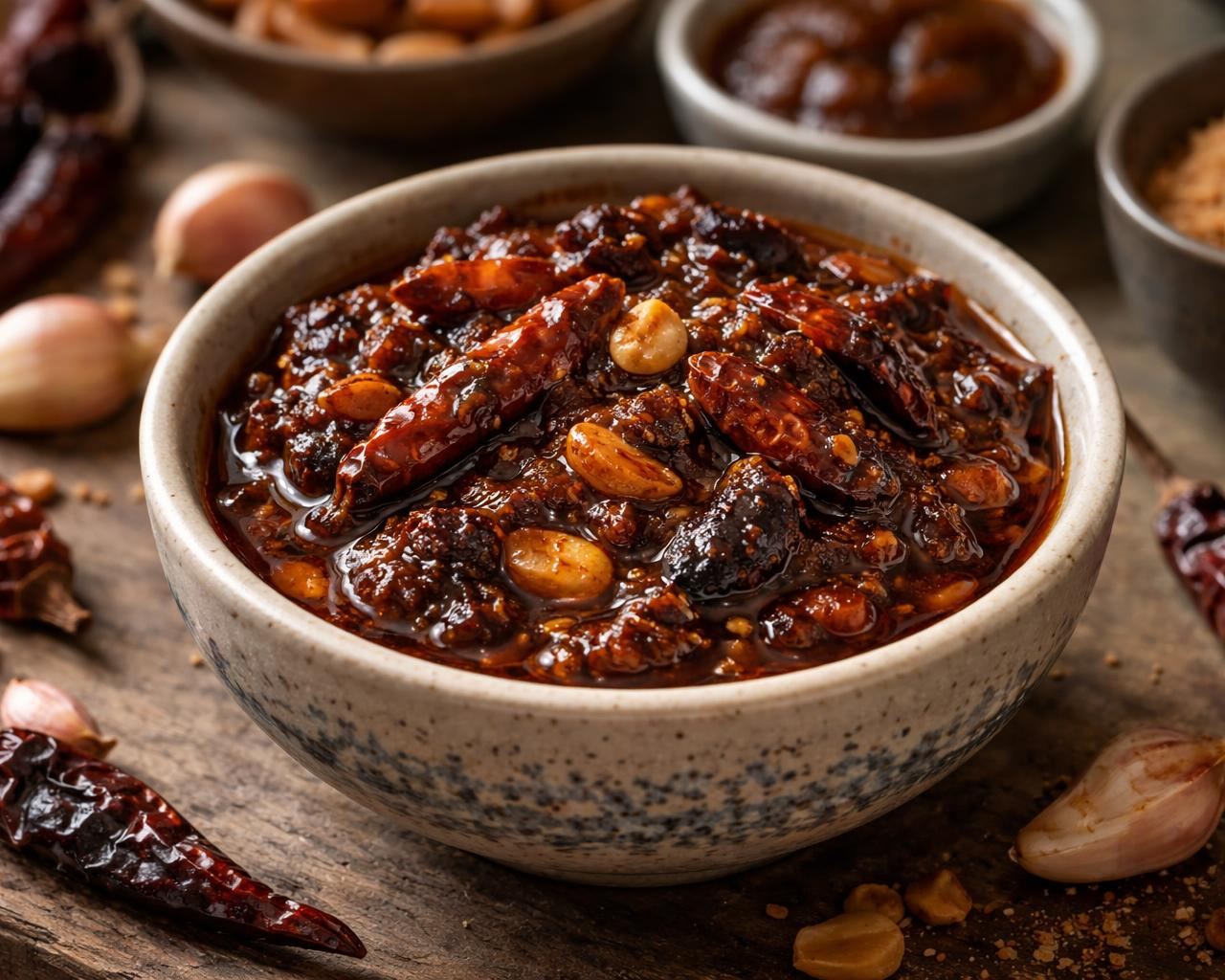
- Prep
- 20 min
- Cook
- 5 min
- Serves
- 4
- Heat
- hot
Nam Prik Pao traditionally leans on fish sauce and shrimp paste for its savory depth, but this vegetarian version proves those aren't strictly necessary, swapping in yellow soybean paste and soy sauce while keeping every bit of the smoky, sweet, and spicy character intact. Charring the chilies, shallots, and garlic until genuinely blackened in spots, rather than just lightly toasted, is what gives the finished paste its distinctive roasted depth once everything is ground together and fried down in oil until rich and glossy. Useful well beyond a simple dip, this paste doubles as a flavor base for other dishes, including a vegetarian tom yum.
Ingredients
- 5-6 Sun-dried Thai long chilies
- 5-6 Sun-dried Thai hot chilies
- 3 Garlic, large cloves (unpeeled for roasting)
- 4-5 Red shallots, small (unpeeled for roasting)
- 1/4 cup Raw peanuts
- 1 teaspoon Tamarind paste
- 1 tablespoon Yellow soybean paste
- 1 1/2 teaspoons Light soy sauce
- 1 1/2 teaspoons Dark sweet soy sauce
- 2 tablespoons Coconut sugar
- 2 tablespoons Vegetable oil (plus more as needed)
- 1/2 teaspoon Salt
Directions
- If making your own tamarind paste, soak dried tamarind fruit in water for 5 to 10 minutes, then mash with your fingers, removing seeds and fibers, and push the pulp through a strainer to get a thick paste.
- Heat a dry pan, wok, or outdoor grill until very hot (an outdoor grill or a well-ventilated stove helps with the smoke). Lay the chilies, shallots, and unpeeled garlic on the heat.
- Let the chilies puff up and char until at least half black, then remove. Continue roasting the shallots and garlic, turning, until softened and charred in spots. Let cool, then peel the shallots and garlic, leaving the burned spots on.
- Tear the roasted chilies into small pieces and grind with the salt in a mortar and pestle into a rough powder, some larger pieces are fine.
- Add the roasted garlic, shallots, and peanuts to the chili and grind until no large pieces remain and a thick paste forms.
- Mix in the yellow soybean paste, tamarind paste, light soy sauce, and dark sweet soy sauce.
- Heat the oil in a frying pan or wok. Scoop in the paste, pushing and mashing it into the oil. Fry for about a minute until hot but not burning.
- Add a splash of water, stirring it into the paste until smooth. Once bubbling, stir in the coconut sugar until fully melted.
- Keep cooking until most of the water evaporates and the paste turns oily and rich, with visible oil separating around it — about a third of the volume should look like separated oil. Add more oil if it looks dry.
- Remove from heat, cool, and transfer to a jar or storage container. Keeps refrigerated for up to a couple of months. Serve at room temperature so the oil separates nicely.
Notes
Roast the chilies until at least half charred black — that level of char is what gives the finished paste its distinctive smoky depth, not just a light toasting.
Substitutions
Store-bought tamarind paste can replace homemade if you'd rather skip that step.